Key Takeaways
- A pen torch is a slim, pen-shaped handheld light that delivers a focused beam from a body small enough to clip into a shirt pocket, built for close-up work rather than lighting up a room.
- Typical uses span medical, inspection and everyday carry: pupil and throat checks, examining wiring and tight engine bays, plus quick EDC and detail tasks like finding a keyhole or reading a map in the dark.
- Look for adjustable focus, dual power, a secure clip and the right brightness: twist-focus beam control, USB-C charging with an AAA fallback, a deep-carry pocket clip, and output matched to close-up work (100-300 lumens).
- Match brightness to the task, not the spec sheet: a pen torch is a close-work tool, so beam control and consistency matter more than chasing the highest possible lumen figure.
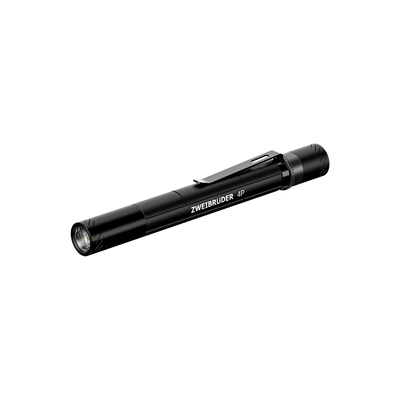
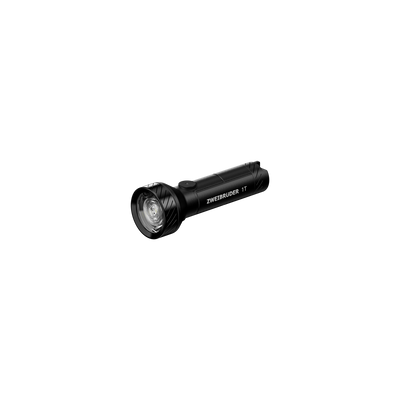
- Our pick is the Zweibrüder ZB4P: 400 lumens, twist-focus, dual power (USB-C plus 2xAAA), IP67 weatherproofing, 60 g, and a 7-year warranty, purpose-built for medical, inspection and everyday-carry use.
A pen torch is a slim, pen-shaped handheld light designed to deliver a focused beam from a device small enough to clip into a shirt pocket or slide into a kit bag. Unlike a standard torch, it prioritises precision over raw power: a controlled cone of light for close-up tasks rather than a wide flood for lighting up a room.
Whether you are a clinician checking pupil response, an engineer inspecting a cable run, or someone scanning the pavement on a dark evening, a pen torch puts reliable, targeted light exactly where you need it. This guide covers what a pen torch does, how to choose one, and why the Zweibrüder ZB4P is our pick for professional and everyday use.
Pen torch meaning and design
The term "pen torch", also called a pen light, describes any torch roughly the size and shape of a writing pen. Most models are between 12 cm and 16 cm long, weigh under 80 g, and run on AAA batteries or a built-in rechargeable cell. The body is typically aluminium or stainless steel, with a pocket clip for hands-free carry.
How a pen torch differs from a regular torch
A standard handheld torch is built for reach: high lumen counts, wide beams, and large reflectors. A pen torch trades that throw for portability and beam control. You carry it in a pocket, not a rucksack. You use it at arm's length, not across a field. That makes it the right tool when space is tight and accuracy matters more than distance.
Why pen torches are searched for medical and professional use
Search data consistently links "pen torch" with medical and professional contexts. The reason is straightforward: clinicians, paramedics, and inspection engineers need a pocket-sized light they can reach for dozens of times a day. A pen torch fits that workflow, always available, always focused, and easy to clean between uses.
Common Uses of a Pen Torch
A pen torch earns its place through versatility. The same design that works in a consulting room performs equally well in a fuse box or on a footpath.
Medical examinations and pupil checks
In clinical settings, pen torches are used for pupil response checks, ENT examinations, and inspecting the mouth and throat. A bright, white beam with consistent output is essential, because clinicians rely on accurate light to make accurate assessments.
Emergency and power-cut lighting
During a power cut, a pen torch stored in a kitchen drawer provides immediate, reliable light. Its compact size means it takes up no meaningful storage space, and a rechargeable model is always ready without the worry of flat disposable batteries.
Inspection, repair and trade tasks
Electricians, plumbers, and automotive technicians use pen torches to illuminate tight spaces: behind dashboards, inside junction boxes, under sinks. The narrow beam cuts through dust and shadow without flooding an entire area with diffused light.
Outdoor and everyday carry use
Walkers, hikers, and dog owners benefit from a light small enough to forget it is in the pocket until it is needed. A pen torch will not replace a head torch on a mountain ridge, but for checking a path marker, reading a map, or spotting a hazard on a pavement, it is faster to deploy and easier to carry.
Why a Pen Torch Is Useful
The advantage of a pen torch comes down to a simple principle: the right amount of light, in the right place, with the least bulk.
Compact size and pocket carry
At roughly 60 g and 13 cm, a pen torch sits alongside a pen without adding noticeable weight. For professionals who already carry instruments, ID badges, and phones, that matters.
Directed beam for close-up tasks
A focused beam lets you examine a specific area, such as a patient's ear, a wiring terminal, or a lock mechanism, without spilling light where it is not wanted. Models with twist-focus allow you to adjust from spot to flood depending on the task.
Lightweight convenience for daily use
The lighter the tool, the more likely it is carried. A pen torch that weighs under 80 g removes the excuse not to have a light source available at all times.
Rechargeable convenience vs disposable batteries
Disposable AAA batteries work, but they run out mid-shift without warning. A rechargeable pen torch with a USB-C port charges from the same cable as a phone and shows when it needs topping up, a practical advantage for anyone who uses the torch daily.
Pen Torch Medical Use: What to Know
Medical professionals represent one of the largest groups of pen torch users, and their requirements are specific.
Typical clinical applications
Pen torches are standard equipment for pupil assessment, oral and throat examination, wound inspection, and checking skin colour and capillary refill. Paramedics use them at incident scenes; nurses use them on ward rounds; vets use them for animal examinations. The common thread is a need for portable, targeted illumination in time-sensitive situations.
Brightness and beam control for examinations
For clinical work, a pen torch needs enough brightness to illuminate tissue clearly, typically in the 100-300 lumen range for close-up tasks, without causing patient discomfort. Colour rendering index (CRI) is a measure of how faithfully a light shows true colours, and along with colour temperature it affects how accurately skin tones and tissue appear under the beam. A high-CRI light makes clinical observations more reliable.
Cleanability and material considerations
Infection control is non-negotiable. A smooth aluminium or stainless-steel body with minimal seams can be wiped down with standard clinical disinfectant between patients. Rubber grips and textured casings may improve handling but can harbour bacteria if not designed for clinical environments.
What makes a medical pen torch suitable for professionals
The short list: consistent beam output, a body that tolerates repeated cleaning, reliable power (ideally rechargeable with a battery fallback), and a build quality that survives being dropped onto a hospital floor. If the torch cannot meet those standards daily for years, it is not a professional tool.
How to Choose the Best Pen Torch
Buying a pen torch is straightforward once you know which features match your use case. Practical buying guides recommend focusing on size, brightness, battery type, durability, and functionality as the core selection criteria.
Brightness and beam quality
Match lumens to purpose. A pen torch is a close-work tool, so for medical examinations and inspection, 100-300 lumens with a controlled white beam is ideal. For trade inspections, a tighter spot within that range helps you pick out detail in shadow. Avoid torches that only list "bright" without stating a lumen count: if the manufacturer will not specify, the figure is likely unimpressive.
Battery type and rechargeable options
USB-C rechargeable models eliminate the recurring cost and waste of disposable batteries. The strongest option is a rechargeable pen torch that also accepts standard AAA cells as a backup, so you are never without power.
Build quality and durability
Look for machined aluminium construction, a sealed weatherproof rating for water and dust resistance, and a lens that resists scratching. A good pen torch should survive a 1-metre drop onto concrete without losing function.
Clip design, grip and portability
The pocket clip is not an afterthought: it determines how securely the torch sits in a pocket or on a lanyard. A deep-carry clip that holds the torch flush with the pocket edge is more practical than a loose clip that snags or bends.
Warranty and long-term value
A manufacturer willing to back their torch with a multi-year warranty is signalling confidence in the product. Torches with a 5-to-7-year warranty typically use better components and tighter tolerances than no-name alternatives with no warranty at all.
Rechargeable Pen Torch: Is It Worth It?
For anyone using a pen torch more than occasionally, a rechargeable model pays for itself within months.
Benefits of USB-C rechargeable lighting
USB-C is now the universal standard for charging. A rechargeable pen torch that uses USB-C charges from a phone cable, a laptop port, or a power bank, with no proprietary charger required.
Charging speed and convenience
Most rechargeable pen torches reach full charge in 1-2 hours. A quick top-up during a lunch break or between shifts keeps the torch ready for the next use.
Running costs over time
A pair of AAA batteries costs roughly £1.50 and lasts 4-8 hours depending on brightness. Over a year of daily professional use, that adds up to £50-£100 in batteries alone. A rechargeable model eliminates that cost entirely.
Best use cases for rechargeable models
If you use your pen torch daily, whether on clinical shifts, inspection rounds, or evening walks, rechargeable is the clear choice. If the torch lives in a glove box for occasional emergencies, disposable batteries may be more practical due to their longer shelf life.
Pen Torch Buying Tips
Choose brightness based on purpose
Do not buy the brightest torch available. Buy the one whose output matches your task. For close-up work, a 200-lumen torch with good beam control will outperform a poorly focused torch with a harsh, uncontrolled flood.
Prioritise reliability over gimmicks
Strobe modes, colour filters, and magnetic tail caps are useful in niche situations. For daily professional use, consistent beam output and dependable construction matter more than feature lists.
Check ergonomics and pocket clip quality
Hold the torch, or check the dimensions carefully. A torch that is too thick for a coat pocket or too heavy for a shirt pocket will not be carried, and a torch left in a drawer is not useful.
Look for warranty support and parts availability
Choose a brand that offers replacement parts (clips, O-rings, lenses) and honours its warranty without friction. This is where established manufacturers with UK distribution have a clear advantage over unbranded imports.
Our Pick: Zweibrüder ZB4P Pen Torch
Why the ZB4P suits medical and professional users
The ZB4P is built around the needs of the professional who uses a pen torch as a working tool, not a gadget. At 60 g with a twist-focus beam and dual power options (USB-C rechargeable plus 2xAAA battery fallback), it addresses the most common frustrations with lower-grade alternatives: inconsistent output, dead batteries, and fragile construction.
Key features and performance highlights
The ZB4P delivers 400 lumens with a beam that reaches up to 90 m, focused and adjustable from spot to flood via the twist-focus system. The machined aluminium body carries an IP67 weatherproof rating and is designed for daily carry and repeated cleaning: smooth surfaces, no exposed seams, and a secure deep-carry pocket clip.
USB-C rechargeability and 7-year warranty
USB-C charging means the ZB4P charges from any standard cable. The 7-year warranty reflects the confidence Zweibrüder places in its German-engineered construction: precision lens alignment, secure battery contacts, and components rated for sustained professional use.
Where it fits in the Zweibrüder range
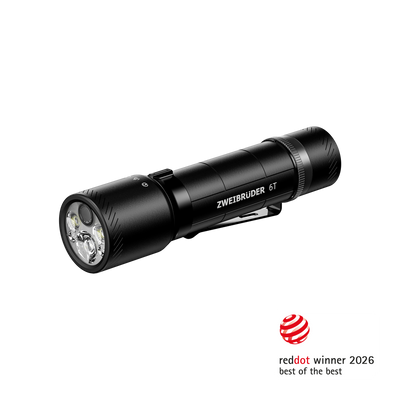
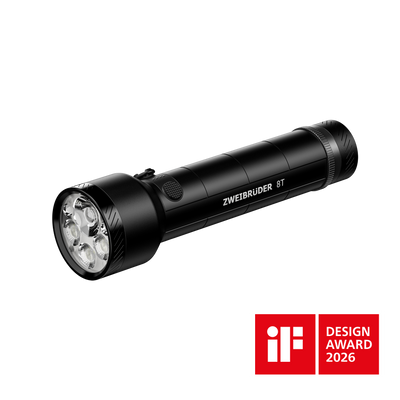
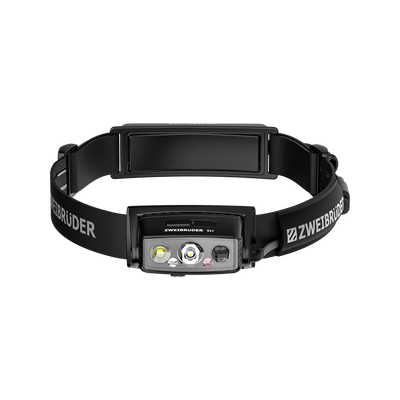
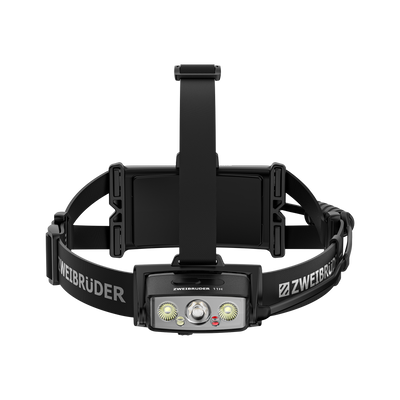
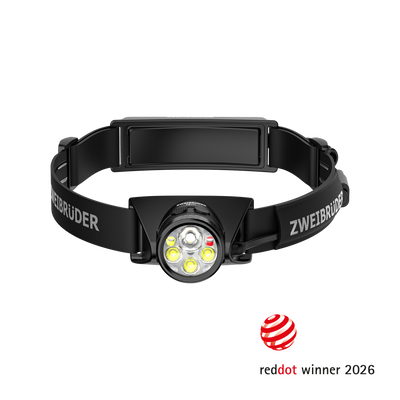
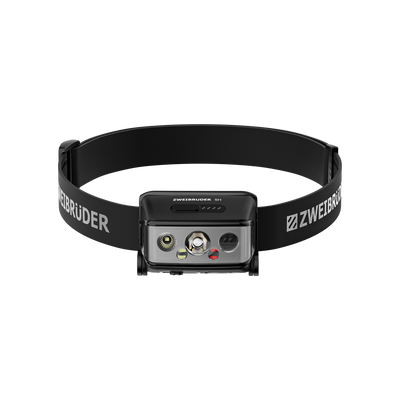
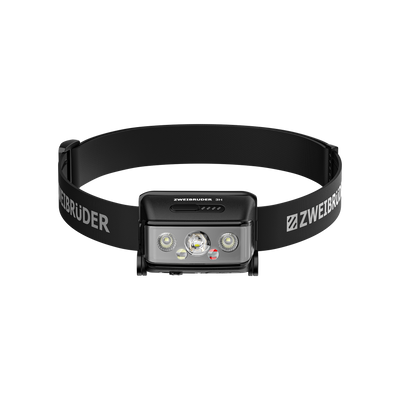
The ZB4P sits in the pen torch category of the Zweibrüder range, purpose-built for medical, inspection, and everyday-carry users who need a reliable, rechargeable pen torch without compromise. For users who need more reach or hands-free light, the range also includes the ZB1T 500-lumen keychain torch at 28 g, the ZB3H and ZB5H head torches at 600 and 1,000 lumens, and the ZB6T 3,000-lumen handheld. The ZB4P is the one you carry every day for the tasks that need focused, immediate light.
Pen Torch Comparison Table
Pen torch vs handheld torch
| Feature | Pen Torch | Standard Handheld Torch |
|---|---|---|
| Typical length | 12-16 cm | 15-30 cm |
| Typical weight | 40-80 g | 150-400 g |
| Brightness range | 100-400 lumens | 500-3,000+ lumens |
| Beam type | Focused spot/narrow flood | Wide flood/long throw |
| Carry method | Pocket clip | Belt holster or bag |
| Primary use | Close-up tasks, inspection | Area lighting, distance |
Rechargeable vs battery-powered pen torch
| Feature | Rechargeable (USB-C) | Disposable Battery (AAA) |
|---|---|---|
| Annual running cost | ~£2 (electricity) | £50-£100 (batteries) |
| Charge/swap time | 1-2 hours (full charge) | 30 seconds (battery swap) |
| Environmental impact | Low (rechargeable cell) | High (battery waste) |
| Shelf life when stored | Requires periodic top-up | 5-10 years (unused) |
| Best for | Daily professional use | Emergency/infrequent use |
Medical vs general-purpose pen torch features
| Feature | Medical Pen Torch | General-Purpose Pen Torch |
|---|---|---|
| CRI (colour rendering) | High CRI (90+) preferred | Standard CRI acceptable |
| Cleanability | Smooth, sealed body essential | Not a primary concern |
| Beam control | Adjustable focus required | Fixed beam often sufficient |
| Brightness | 100-300 lumens (comfortable) | 100-300 lumens (variable) |
| Reliability standard | Must perform every use | Occasional failure tolerable |
FAQs About Pen Torches
What is a pen torch used for?
A pen torch is used for any task that requires a focused, portable light source. Common uses include medical examinations (pupil checks, throat inspections), electrical and mechanical inspections, and everyday tasks such as finding a keyhole in the dark or checking a path while walking the dog.
Is a pen torch medical equipment?
A pen torch is widely used as a clinical tool by doctors, nurses, paramedics, and vets for patient examinations. While it is not classified as a regulated medical device in the same way as a stethoscope or blood pressure monitor, it is standard kit in most clinical settings. Models designed for medical use prioritise beam quality, CRI, and cleanability.
What brightness is best for a pen torch?
A pen torch is a close-work tool, so for medical and close-up inspection use, 100-300 lumens with a focused beam provides clear visibility without causing discomfort. The same range covers most everyday carry too. Higher lumen counts are rarely necessary in a pen torch format, though a twist-focus model like the 400-lumen ZB4P concentrates its output into a tight, controllable spot when you need it.
Are rechargeable pen torches better?
For frequent use, yes. A rechargeable pen torch eliminates the ongoing cost and inconvenience of disposable batteries and ensures the torch is always topped up when stored on a charging cable. The strongest designs, such as the ZB4P, combine USB-C rechargeability with an AAA battery fallback for situations where charging is not available.
How long does a pen torch battery last?
Runtime varies by model and brightness setting. A typical rechargeable pen torch delivers 4-8 hours of continuous use at medium output. Models with efficient LED drivers and well-matched batteries can extend runtime significantly, and lower brightness modes stretch a single charge considerably further.
A pen torch is a compact, precision tool, and the right one makes a measurable difference to how efficiently you work. The Zweibrüder ZB4P combines 400-lumen output, a 90 m beam, twist-focus control, IP67 weatherproofing, dual power (USB-C plus 2xAAA), and a 7-year warranty in a 60 g package built for daily professional use.
View the full ZB4P specifications and order it direct from Zweibrüder.