Key Takeaways
- Match brightness to the ground: marked trails are fine on 500-1000 lumens, but hiking on unlit, technical ground calls for 1000-2000 lumens to see far enough ahead.
- Beam throw beats raw lumens: a focused spot beam that reaches 200m or more picks out trail markers and rough footing far better than a wide flood that only lights your boots.
- Runtime on medium is the number that counts: aim for 8 or more hours at a usable setting, plus USB-C charging and ideally a dual-power option for multi-day trips away from the mains.
- Keep weight low for all-day comfort: a well-balanced torch around 120-130g sits steady on rough ground without bouncing, so you barely notice it over a full day on the hill.
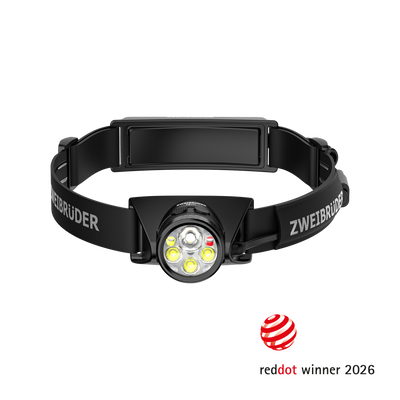
- The lightweight pick for most hikers is the Zweibrüder ZB5H: 1000 lumens, a 200m beam, IP67 weather sealing, auto-focus, a red mode and a 7-year warranty in a 124g body.
What to Look for in a Hiking Head Torch
A reliable head torch for hiking does one job well: it keeps both hands free while lighting the path ahead. Whether you are navigating a pre-dawn start on the Pennine Way, setting up camp after dark, or walking the dog on unlit lanes in winter, the right hiking head torch makes every step safer and more confident.
Choosing the best head torch for hiking means weighing up a handful of practical factors: brightness, beam distance, battery life, comfort, and weather resistance. Get those right, and you will barely notice the torch is there. Get them wrong, and you will be fumbling with a dying light halfway up a fell.
Why a Dedicated Head Torch for Hiking Outperforms a Generic Torch
A handheld torch ties up one hand and throws light wherever your arm points, not where your eyes look. A purpose-built hiking head torch sits on your head, moves with your gaze, and leaves both hands free for trekking poles, map reading, or scrambling over rocks. That difference matters the moment the terrain gets rough.
Who This Guide Is For
This guide is for hikers, campers, walkers, anglers, and anyone who spends time outdoors in low light. If you want a torch you can trust in UK weather, wear comfortably for hours, and recharge without hassle, the advice here applies.
How to Choose Between Hiking, Camping, and Trail-Walking Use
Hikers need a balance of beam throw and runtime. Campers often prefer a wide flood beam and a red-light mode. Trail walkers covering rough ground want something lightweight and secure. Many of the best models cover two or three of these needs, and the trick is knowing which features matter most for your primary use.
Our Top Picks for the Best Head Torch for Hiking
The best hiking head torch for you depends on how and where you use it. The Zweibrüder range covers every category below, from lightweight all-rounders to high-output expedition models, all designed and engineered in Germany with USB-C charging and a 7-year warranty. Here is how to think about the main categories:
- Best overall pick: a 1000-lumen rechargeable torch with a focused beam, solid runtime, and a comfortable headband, such as the Zweibrüder ZB5H. This suits most UK hikers most of the time.
- Best for long-distance hiking: prioritise runtime and dual-power flexibility over peak brightness.
- Best for camping: a wide flood beam and red-light mode matter more than a long throw.
- Best for lightweight packing: around 124g, compact housing, and reliable enough to be your only light source.
- Best for maximum brightness: 2000 lumens or more for fast technical terrain at night, with the understanding that runtime will be shorter on high.
- Best for UK conditions: IP66 or IP67 sealing, a proven track record in rain, and available from UK retailers with strong warranty support.
Zweibrüder Head Torches: Which Model Is Right for You?
The Zweibrüder range is designed and engineered in Germany and covers everything from casual evening walks to serious multi-day expeditions. Each model shares USB-C rechargeability, IK07 impact resistance, robust drop-tested build quality, a 7-year warranty, and a practical feature set.
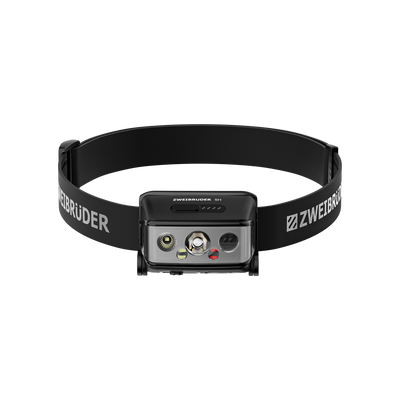
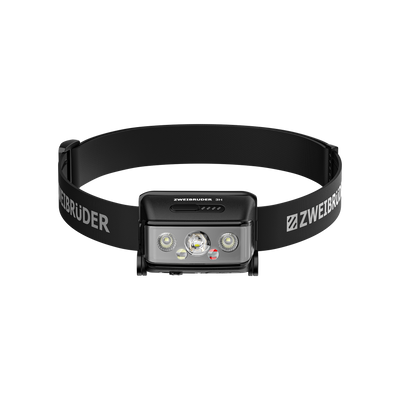
- ZB3H: 600 lumens, 150m beam distance, IP67 sealing, 124g. A strong entry point for regular hikers and walkers who want reliable, no-fuss performance.
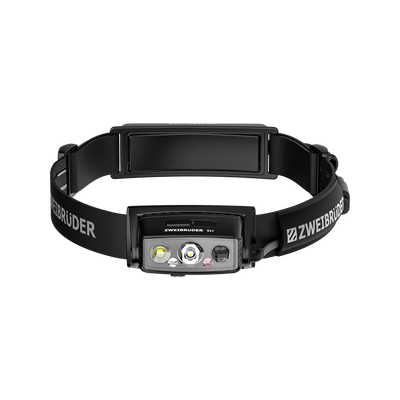
- ZB5H: 1000 lumens, 200m beam, IP67, just 124g, with auto-focus, a red mode, and dual-power 3xAAA flexibility. The lightweight all-rounder for longer day hikes and overnight camps.
- ZB7H: 1200 lumens, 240m beam, IP67, 233g. A versatile choice with enough power for most trail conditions.
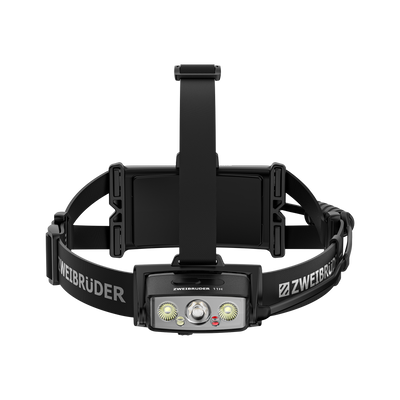
- ZB9H: 2000 lumens, 260m beam, IP67, 252g. Named Best Headlamp by BILD, with the output and throw for demanding terrain and multi-day trips.
- ZB11H: 2500 lumens, 260m beam, IP66, 371g, with up to 80 hours of runtime. The top of the range, built for serious users who need maximum brightness and multi-day endurance.
All models include a red-light mode, and the ZB9H adds a dedicated rear red safety light for visibility. Every model is backed by a 7-year manufacturer warranty.
Here is the ZB3H earning its keep on an evening summit:
How to Choose the Best Hiking Head Torch
The sections below explain the main specs in plain English. Lumens describe how bright a torch is, beam distance is how far the light reaches, the IP rating is how well it shrugs off water and dust, and runtime is how long it lasts before it needs charging. Here is how each one affects your choice on the hill.
Brightness and Lumen Output
Lumens measure total light output. For most marked trails, 500-1000 lumens on a medium setting is plenty. You only need 1000-2000 lumens for fast movement on technical ground or unlit hillsides where you are scanning well ahead.
Check out our guide on how many lumens you need.
Beam Pattern: Flood vs Spot vs Hybrid
A flood beam lights a wide area close to you, which is useful in camp or on broad paths. A spot beam throws light further, so it is better for picking out trail markers at distance. The most versatile hiking torches combine both.
Battery Life and Runtime
Runtime on a medium setting is the figure that matters day to day. A torch rated at 2000 lumens but lasting only 90 minutes on high is less useful for a long day than one offering a steady, usable output for many hours.
Rechargeable vs Replaceable Batteries
USB-C rechargeability is now the practical standard for regular hikers. For multi-day trips far from power, a torch that also accepts standard AAA batteries gives you a backup plan.
Weight and Comfort for Long Wear
Anything around 120-130g is comfortable for most people over a full day. Heavier torches above 200g are still wearable, but headband design and weight distribution start to matter more.
Water Resistance and Durability
Look for an IP rating of at least IPX4 (rain and splashes). For serious UK mountain use in winter, an IP66 or IP67 sealing handles sustained rain and driving spray.
Red-Light Mode and Night-Vision Preservation
A red-light mode lets you check a map or move around camp without destroying the dark adaptation your eyes have built up. Anglers and campers find this especially useful.
Lockout, Beam Memory, and Other Practical Features
A lockout switch stops the torch turning on accidentally inside your pack. Beam memory means the torch returns to your last-used setting when you switch it on, rather than cycling through modes every time.
Brightness, Beam Distance, and Beam Type
What Lumen Output Means on the Trail
Lumens tell you how much light a torch produces, but not how far it reaches or how it spreads. A torch with a tight spot beam can light up a cairn 200m away. The same output in a pure flood beam may only reach 40m, but it lights up the whole path in front of you.
When Flood Beam Is Best
Flood works well for camp tasks, close-range path walking, and group settings where you want to avoid blinding others.
When Spot Beam Is Best
Spot is better for route-finding on open hills, scanning for trail markers, and fast-moving technical descents.
Why Combined Flood and Spot Beams Are Useful
A hybrid or dual-beam torch lets you switch between close and distance lighting without carrying two torches. Some models go further with auto-focus, adjusting the beam for you as you look near and far. This is what most experienced hikers prefer.
Battery Life and Charging Options
Why Runtime Matters More Than Peak Brightness
A torch that dims after 20 minutes of full power is less useful than one that holds a steady, usable output for hours. Always check the runtime at the setting you will actually use, not just the headline figure.
USB-C Rechargeability as a Modern Standard
USB-C charging means you can top up from a power bank, a car socket, or a laptop. It removes the cost and waste of disposable batteries for regular users.
Dual-Power Options for Longer Trips
If you are heading out for several days, a torch that accepts both a rechargeable cell and standard batteries gives you flexibility. You can carry spare AAAs as emergency backup without adding much weight.
Cold-Weather Performance
Lithium batteries hold their charge better in cold conditions than alkaline cells. If you hike in Scottish winters or at altitude, this matters.
Comfort, Fit, and Weight
A hiking head torch needs to stay put on rough ground without bouncing or slipping. Look for a wide, adjustable headband with a non-slip lining. If you wear a helmet for scrambling or climbing, check that the torch fits over the helmet or has a helmet mount to secure it firmly.
Weight distribution matters more than raw weight. A well-balanced torch around 124g feels lighter than a poorly designed one of the same weight. For emergency or backup use, a compact torch that packs flat is worth considering.
Durability and Weather Resistance
IP Ratings and What They Mean
IP ratings tell you how well a torch resists water and dust. IPX4 handles splashes. IP66 handles heavy rain. IP67 survives brief submersion. For year-round hiking in the UK, IPX4 is the minimum; IP66 or higher is better.
Weatherproof Performance for UK Conditions
British hills deliver rain, sleet, mist, and mud in quick succession. A torch rated to IP66 or IP67 with a solid, sealed housing will handle all of this without worry. The best brands back their weather resistance with extended warranties, with Zweibrüder offering up to seven years.
Useful Features for Hiking and Camping
- Red-light mode preserves night vision and avoids disturbing others in a tent, bothy, or on a night-fishing session.
- Lock mode prevents the torch switching on in your rucksack and draining the battery.
- Beam memory returns to your preferred setting each time you switch on.
- Battery indicator tells you how much charge is left before you set off.
- Rear red light makes you visible to traffic or other walkers from behind, a genuine safety feature on shared paths and roads.
Comparing the UK Range at a Glance
| Model | Lumens | Beam Distance | Weather Rating | Weight | Recharge | Best For |
|---|---|---|---|---|---|---|
| ZB3H | 600 | 150m | IP67 | 124g | USB-C | Day hikes, walking |
| ZB5H | 1000 | 200m | IP67 | 124g | USB-C | Lightweight all-rounder, longer hikes, camping |
| ZB7H | 1200 | 240m | IP67 | 233g | USB-C | All-round hiking |
| ZB9H | 2000 | 260m | IP67 | 252g | USB-C | Demanding trails, multi-day |
| ZB11H | 2500 | 260m | IP66 | 371g | USB-C | Serious multi-day expeditions |
Best Head Torch for Camping vs Hiking
What Hikers Prioritise
Hikers want beam throw, secure fit on the move, and enough runtime to cover a full day. Spot or hybrid beams help them pick out the trail ahead.
What Campers Prioritise
Campers want a wide flood beam for close tasks, a red-light mode for tent use, and a comfortable fit for wearing around camp. Extreme beam distance matters less.
When a Hiking Head Torch Is Also the Best Camping Head Torch
A torch with switchable flood and spot modes, a red light, and 8 or more hours of runtime covers both use cases well. Most mid-range and premium hiking torches now include these features as standard.
Camping this summer? Read our full best torch for camping guide.
Use Cases: Hiking, Fishing, Dog Walking, and Trade Work
A well-chosen hiking head torch is not a single-use purchase. The same torch that lights a winter Munro can serve you on an early-morning summit push, a dawn fishing session, an evening dog walk, or a task in a dark loft. The key features (hands-free use, weather resistance, long runtime, and reliable brightness) translate across all of these activities.
For anglers and campers, the red-light mode is often the deciding feature. For trade workers, a lockout switch and robust housing earn their keep.
How to Choose the Right Torch for Your Budget
- Under £25: basic models for occasional use. Expect lower lumen output and shorter runtime, but adequate for well-lit paths and camp use.
- £25 to £60: the mid-range sweet spot. USB-C charging, a strong beam, decent weather resistance, and a comfortable headband. This is where most regular hikers find the best value.
- £60 and above: premium performance. Higher output, longer runtime, superior build, and advanced features like beam memory, lockout, and extended warranties. Worth the investment if you hike frequently or in challenging conditions.
The practical advice is simple: buy the best torch you can afford for how often you will use it. If you hike every weekend, a reliable mid-range model pays for itself quickly in confidence and convenience.
Frequently Asked Questions
What is the best head torch for hiking?
The best hiking head torch offers 500-1000 lumens, a focused or hybrid beam pattern, at least 8 hours of runtime on medium, USB-C rechargeability, and a comfortable, weather-sealed design. The right model depends on your typical terrain and how long your trips last. For most hikers, the lightweight Zweibrüder ZB5H hits this balance well.
What lumens do I need for hiking?
For marked trails and general hiking, 500-1000 lumens is enough. For fast movement on technical or unmarked terrain at night, 1000-2000 lumens gives better visibility at distance.
Is a red light useful on a head torch?
Yes. A red-light mode preserves your night vision, avoids disturbing others in shared shelters or tents, and is especially valued by anglers and campers.
Are rechargeable head torches better?
For regular use, yes. USB-C rechargeable torches are cheaper to run, more convenient, and produce less waste than disposable-battery models. For multi-day trips, a dual-power option adds security.
What is the best head torch for hiking UK buyers?
UK hikers should look for a torch rated to at least IPX4, ideally IP66 or IP67, with a proven record in rain and cold. Availability from UK retailers and a strong warranty, such as the seven years offered with the Zweibrüder range, are also worth prioritising.
Can one torch work for both camping and hiking?
Yes, provided it offers both flood and spot beam modes, a red light, and enough runtime. Most mid-range hiking head torches now cover both roles well.
Ready to find the right head torch for your next hike? The Zweibrüder ZB5H delivers 1000 lumens, a 200m beam, IP67 weather sealing, auto-focus and a red mode in a lightweight 124g package, a standout starting point for hikers who want dependable performance without the weight. See the full ZB5H specifications and order direct