Key Takeaways
- Most security teams carry a rechargeable LED handheld torch rated between 500 and 1,000 lumens, with a beam distance of at least 200 metres for perimeter and car park checks.
- Durability ratings matter as much as output. Look for IP66 or higher, IK07 impact resistance, and an aluminium housing that survives drops onto concrete.
- Beam control beats raw brightness. A torch that shifts from spot to flood without fumbling saves seconds during a search or an ID check.
- USB-C rechargeability suits shift work. One cable, predictable charge times, and no ongoing battery spend across a team.
- Match the torch to the task. Handheld for patrol, head torch for hands-free inspection, pen torch for close-up checks.
What torch do security use?
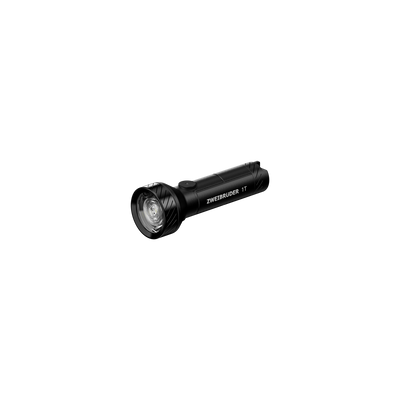
Security staff use LED handheld torches built for daily duty. The typical specification is 500 to 1,000 lumens, an aluminium body, IP66 or better water resistance, and a rechargeable battery that lasts a full shift. Tactical torches with a rear tail switch are common, as are head torches for hands-free work and pen torches for close inspection.
The job dictates the kit. A torch used four nights a week in rain, dust and cold has to start first time, every time.
What security staff use a torch for
Patrols, door checks, bag and ID checks, vehicle inspections, reading meters and signage, checking locks and seals, and lighting an incident scene until support arrives. Each task needs a different beam, which is why beam control matters.
Key features of a security guard torch
Brightness you can adjust, a beam that reaches past 200 metres, runtime that covers a shift, glove-friendly controls, and a body that takes knocks. A pocket clip or belt holster keeps the torch accessible without occupying a hand.
Why torch choice matters for patrols and checks
A weak beam forces you closer to something you have not identified yet. A strong, controllable beam lets you assess from distance. That is a safety margin, not a convenience.
Security torch use cases in emergency services and frontline work
Police, fire, and search and rescue teams use the same core specifications: high output for searching open ground, hands-free options for working at height or in confined spaces, and a rear red light for roadside visibility.
Best torch types for security work
Handheld security torches
The default choice. Best reach, best aiming control, easiest to deploy one-handed from a belt clip.
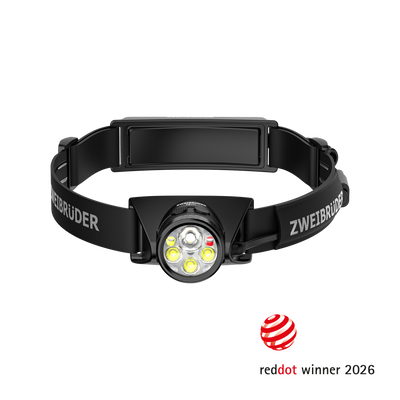
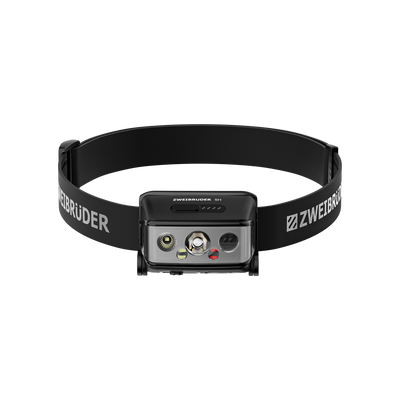
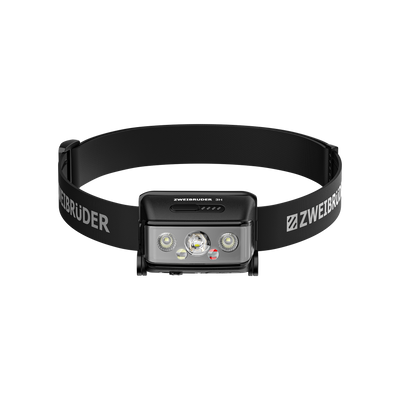
Head torches for hands-free security tasks
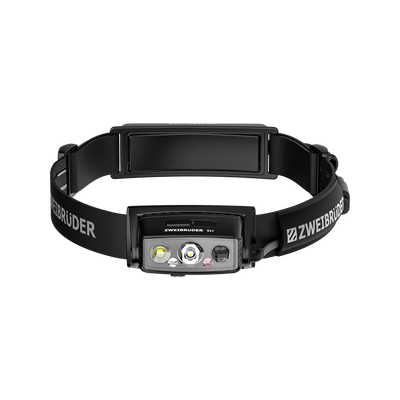
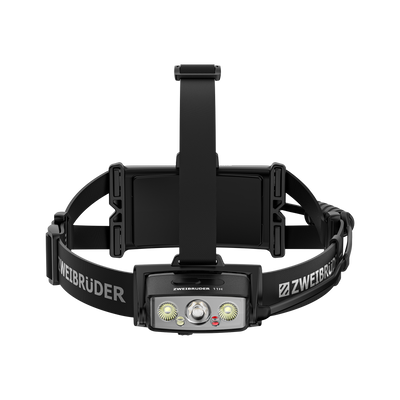
A head torch frees both hands; a handheld torch gives more reach and aiming control. Use a head torch for locks, paperwork, equipment checks and casualty care.
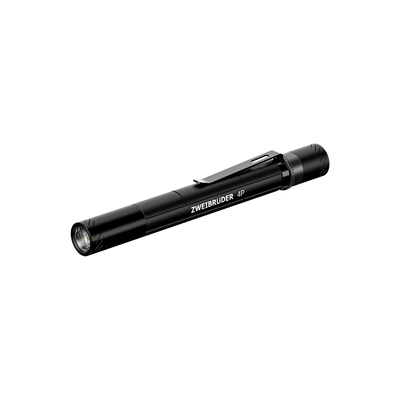
Pen torches for close inspection and identification checks
Low output, tight beam, pocket-sized. Suited to ID documents, pupil checks and inspecting small components.
Tactical torches for patrol and incident response
Tail switch, momentary-on, strobe mode, textured grip. Built for fast activation under pressure.
Right-angle and clip-on options for uniform use
Clip to a vest or pocket to light the immediate area while both hands stay free.
Essential features to look for in a security torch
Brightness and lumen range
500 to 1,000 lumens covers most security work. Higher output is useful for search tasks.
Beam pattern, focus, and throw distance
A spot beam reaches; a flood beam covers. Focus-adjustable torches do both.
Battery type and USB-C rechargeability
USB-C charging means one cable across the team and no ongoing battery spend.
Runtime and power modes
Check runtime at the mode you actually use. Mid output is where most shifts are spent.
Build quality, impact resistance, and weather resistance
Aluminium housing, IP66 or IP68 (dust-tight and suitable for immersion), IK07 impact rating.
Switch design and glove-friendly operation
A raised, firm switch you can find without looking, and press with gloves on.
Weight, grip, and carry comfort
Around 150 to 250 grams is comfortable for a long patrol.
How many lumens do security torches need?
Low-light indoor checks
100 to 300 lumens. Enough to read a label without bouncing glare off walls.
Patrol use in car parks, sites, and perimeters
500 to 1,000 lumens with 200 metres of throw.
Search, incident, and large-area illumination
1,000 lumens and above, with beam distance over 300 metres.
Balancing brightness with runtime
Maximum output drains cells quickly. Run mid output and step up when needed. For a plain-English breakdown of output levels, see our guide on how many lumens you need.
When more lumens are not better
Indoors, high output reflects back and destroys your night adaptation.
Security torch beam types and lighting modes
Spot beam for distance and identification
Concentrated light for identifying a figure or vehicle at range.
Flood beam for wide-area visibility
Even, close-range light for stairwells, corridors and vehicle interiors.
Zoom or focus-adjustable torches
One torch covering both jobs. Auto-focusing designs remove the fumble entirely.
Strobe mode and attention signals
Rapid pulse to attract attention or mark a position.
Red light mode for night-vision preservation
Red light protects dark adaptation and keeps you visible from behind at the roadside.
See how each beam type behaves
Every beam is a trade-off between reach and spread. Select a beam type, then adjust the power level to see how the pattern and intensity change on a wall a few metres away.


Spot beam
An intense, focused beam with a soft halo around it. Reaches the furthest — this is the beam for searching and identifying at distance.
- Throw (reach) Long
- Spread (width) Narrow
Flood beam
A broad, even spread of light without harsh shadows. Ideal for lighting a whole room, doorway or scene at close range.
- Throw (reach) Short
- Spread (width) Wide
Reading beam
A uniform, shadow-free pool of light. Comfortable and glare-free for close-up tasks like maps, documents and equipment checks.
- Throw (reach) Short
- Spread (width) Medium
Spot + Flood beam
The combined beam: a focused hotspot inside a broad ring of flood light. Distance and peripheral awareness at the same time.
- Throw (reach) Long
- Spread (width) Medium
Power levels: Low 15 lm · Mid 600 lm · High 3,000 lm · Boost 4,000 lm.
Power options for security torches
USB-C rechargeable torches
Standard for professional duty use. Predictable charge times, no consumables.
Disposable battery torches
Useful as a backup where charging is unavailable.
Dual-power torch options
Rechargeable pack with an alkaline fallback. Good for long deployments.
Charging, battery storage, and shift readiness
Charge at the end of the shift, not the start. Store spare cells at around half charge.
Battery management for operational teams
Number the torches, log charge cycles, and keep two charged spares per team.
Best security torch UK: how to choose the right model
Best security torch UK for patrol work
1,000 lumens, 250 metres plus, IP68, USB-C, belt clip.
Best security guard torch for ID and bag checks
A pen torch or a 200 lumen compact with a clean flood beam.
Best torch for event security
Mid output with a wide beam and a long runtime for a 10-hour shift.
Best torch for night patrols and perimeter checks
Long-throw spot beam, red rear light, weather sealing.
Best torch for emergency response teams
High output, fast beam control, hands-free option, proven drop resistance.
Best torch for indoor and outdoor duty
A focus-adjustable handheld covers both without a second torch.
Torch options for different security environments
Corporate and concierge security
Compact, discreet, 200 to 500 lumens.
Event and crowd management
Wide flood beam, long runtime, lightweight.
Rail, transport, and infrastructure security
High-visibility red light, strong sealing, hands-free option.
Industrial and facility security
Impact-resistant housing and a clip for hands-free inspection.
Night patrols and rural sites
Maximum throw, extended runtime, spare battery.
Hazardous environments and intrinsically safe requirements
Where explosion risk exists, an ATEX-rated torch is required. Standard duty torches are not a substitute.
Recommended torch features for emergency services professionals
Why emergency services need different torch features
Seconds count. Controls must work by feel, on the first press, with gloves.
Hands-free lighting for search and inspection
Helmet or headband mounting for rope work, confined spaces and casualty care.
Compact torches for kit carry
A pen torch in a chest pocket weighs almost nothing and is always there.
High-output lighting for scene management
1,000 lumens plus to light a scene until vehicle lighting arrives.
Durability and reliability under pressure
Aluminium, sealed switches, tested drop ratings, and a warranty that backs it up.
How to maintain a security torch
Cleaning lenses and contacts
Wipe the lens with a soft cloth. Keep charging contacts dry and free of grit.
Battery care and charging habits
Avoid full discharge. Recharge after every shift.
Storage and inspection checks
Store dry, at room temperature. Check output and seals monthly.
Replacement parts and lifespan considerations
Replace worn seals and clips rather than the whole torch.
When to upgrade or replace a torch
When runtime drops noticeably or the housing no longer seals.
Why choose Zweibrüder torches for security use?
German-engineered reliability
Zweibrüder builds portable lighting to consistent tolerances, with aluminium housings and sealed switch assemblies.
USB-C rechargeable performance
Every duty model charges over USB-C, so one cable covers the whole kit bag.
7-year warranty and long-term value
A 7-year warranty gives procurement teams documented evidence of expected service life.
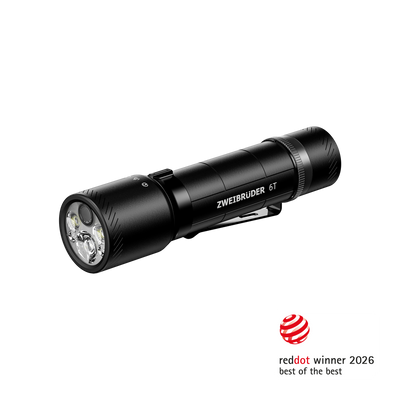
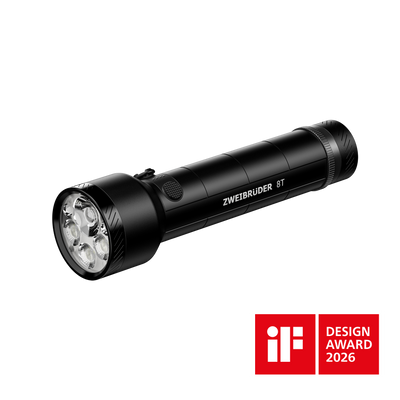
ZB6T and ZB8T for handheld security use
The ZB6T delivers 3,000 lumens with a 300-metre beam and IP67 sealing, plus auto-focus, a red light and a supplied holster. The ZB8T steps up to 4,000 lumens and a 340-metre beam with a joystick switch and charging station for open-area search. Both are USB-C rechargeable with glove-friendly operation. For a fuller duty comparison, see our tactical torch guide.
Coming soon: the ZB19T
The ZB19T is the next addition to the professional handheld range, debuting at the Emergency Services Show in September with UK stock expected from October/November 2026. Full specifications will be published at launch.
Four lens technologies, one torch head
Each lens technology bundles one or more of the beam types above into a single head — from one fixed cone (MF) up to four switchable light functions (QF).


QF — Quattro Functional optic
Quattro Functional optic — four switchable light functions in one head. Maximum flexibility in any situation.
TF — Triplex Functional optic
Triplex Functional optic — a spot beam for range, a flood beam for broad coverage, plus an integrated red light that preserves night vision.
DF — Dual Functional optic
Dual Functional optic — switches between a spot beam for maximum range and a broad, glare-free flood for near-range work.
MF — Mono Functional optic
Mono Functional optic — a single fixed, balanced light cone for consistent illumination.
- Single fixed beam
Models: ZB1T
Which Zweibrüder torch suits which security task?
Best model for patrol and perimeter checks
ZB8T, for maximum beam distance across open ground.
Best model for search and incident work
ZB8T, at 4,000 lumens with a 340-metre beam.
Best model for multi-day operational use
ZB8T with a charged spare.
Best model for mixed indoor and outdoor duty
ZB6T, whose auto-focus covers both close flood and long throw.
Security torch comparison table
Torch type comparison
| Torch type | Beam style | Best use |
|---|---|---|
| Handheld | Spot or adjustable | Patrol, search |
| Head torch | Flood or adjustable | Hands-free checks |
| Pen torch | Narrow flood | ID, medical |
| Right-angle | Flood | Clip-on task light |
Lumens and runtime comparison
| Output | Typical runtime | Task |
|---|---|---|
| 100–300 lm | 10–20 hours | Indoor checks |
| 500–1,000 lm | 5–10 hours | Patrol |
| 1,000 lm+ | 2–5 hours | Search, incidents |
Rechargeable vs disposable comparison
| Factor | USB-C rechargeable | Disposable |
|---|---|---|
| Running cost | Low | Ongoing |
| Shift readiness | High | Depends on stock |
| Best role | Daily duty | Backup |
Best use-case comparison
| Role | Torch | Key spec |
|---|---|---|
| Patrol officer | Handheld | 1,000 lm, IP68 |
| Event steward | Handheld | Long runtime |
| Responder | Handheld + head torch | Fast beam control |
Common mistakes when buying a security torch
Buying too much brightness
High output indoors causes glare and short runtime.
Ignoring beam distance and spill
Lumens describe output, not reach. Check the metres.
Overlooking battery life
Check runtime at mid output, not maximum.
Choosing the wrong size or weight
A heavy torch gets left in the vehicle.
Not matching the torch to the role
Buy for the task you do most.
Frequently asked questions about security torches
What torch do security use at night?
A rechargeable LED handheld of 500 to 1,000 lumens with 200 metres or more of throw, plus a red light mode.
What is the best torch for security guards?
A USB-C rechargeable handheld with adjustable focus, IP66 or better, and glove-friendly controls. The ZB6T and ZB8T fit this profile.
How bright should a security torch be?
500 to 1,000 lumens for general patrol; 1,000 plus for search and incident work.
Are rechargeable torches better for security?
Yes for daily duty. Lower running cost and predictable readiness. Keep a disposable-battery torch as backup.
What is the best torch for emergency services use?
Look for high output, fast beam control, proven impact and water resistance, hands-free mounting and a long warranty.
Compare the full duty range, including the ZB6T and ZB8T, at zweibruder.co.uk.