Key Takeaways
- UK police forces do not issue one standard torch. Officers carry a range of handheld, pen and head torches chosen by role, force policy and personal preference.
- Reliability outranks raw brightness. A duty torch needs impact resistance, an IP rating suited to British weather and consistent output across a full shift.
- Task fit drives the specification. Patrol checks need 200 to 600 lumens; search and pursuit work needs beam distance of 300 metres or more.
- Trade-offs are unavoidable. More lumens usually means shorter runtime, and a smaller body usually means lower sustained output.
- Procurement needs evidence. CE certification, stated IP and IK ratings, and a long warranty make a torch easier to justify to a supervisor or a budget holder.
What torches do police use?
There is no single police torch issued across UK forces. Officers use LED handheld torches, compact pen torches and head torches, and the exact model often depends on role, force procurement and personal purchase. Some forces issue a basic patrol light. Many officers then buy something better themselves.
The torch police use in day-to-day service is usually a compact LED handheld with a rechargeable battery, an output between 200 and 800 lumens and a beam that reaches 100 to 200 metres. Specialist teams carry more.
Police torch vs standard torch
A standard household torch is built for occasional use. A police duty torch is built for repeated, daily, hard use. The differences are measurable. Duty torches use aluminium or reinforced polymer housings, sealed switches, regulated output that holds brightness as the battery drains, and impact ratings that survive a drop onto tarmac.
A consumer torch may claim high lumens but drop to a fraction of that within minutes. A duty torch holds a stated output for a stated runtime. That difference matters when you are checking a garden at 3am.
Common torch formats used in policing
Three formats cover most policing work:
- Handheld duty torch. The main tool. Belt-carried, one-handed operation, 200 to 1,000 lumens.
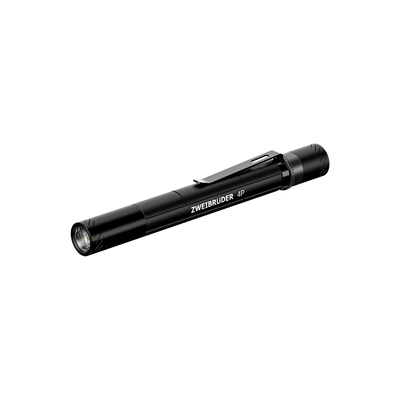
- Pen torch. Pocket-sized, 100 to 400 lumens, used for medical checks, document inspection and vehicle identification numbers.
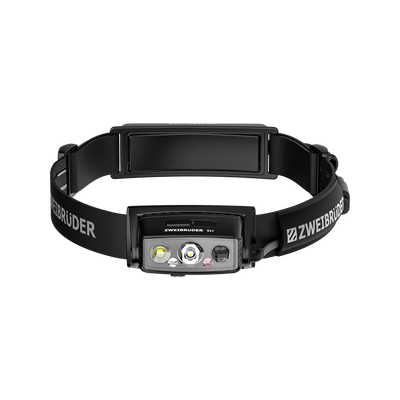
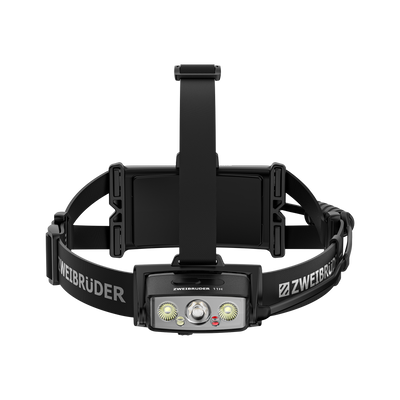
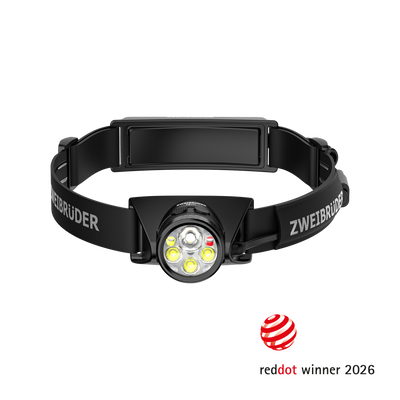
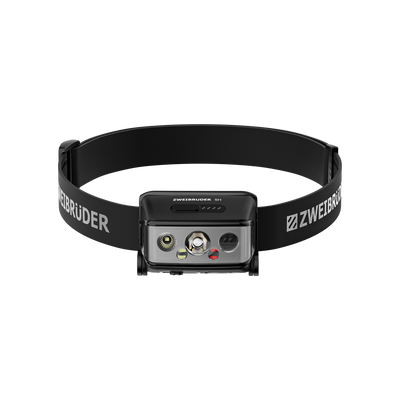
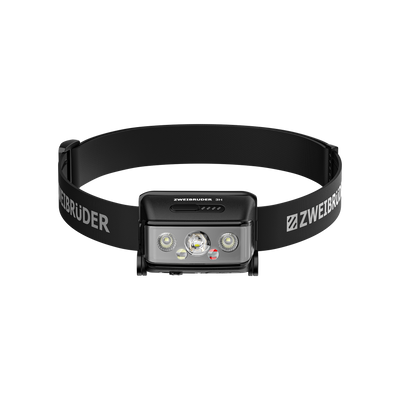
- Head torch. Hands-free. Used for searches, scene examination, rope work and any task needing both hands.
Why police need a dedicated duty torch
Officers work at night, in rain, in confined spaces and under time pressure. A duty torch must switch on first time, every time. It must survive being dropped, soaked and knocked against a doorframe. It must be operable with gloves on. A general-purpose torch rarely meets all four conditions.
What features should a police torch have?
Brightness and lumen output
Lumen output measures total light produced. For general patrol, 200 to 600 lumens is sufficient. For search work, 800 lumens and above is more useful. Above roughly 1,500 lumens, extra output mainly adds heat and shortens runtime rather than improving what you can actually see. For a plain-English breakdown, see our guide on how many lumens you need.
Beam distance and beam pattern
Beam distance tells you how far usable light reaches. A tight spot beam throws further and suits searching fields, alleyways and open ground. A wide flood beam lights a room or a vehicle interior without glare. Officers who search rural ground should look for 300 metres or more.
Focusable vs fixed-beam designs
A focusable beam lets you move between spot and flood without changing torch. Fixed-beam torches are simpler and often cheaper, but you lose that flexibility. Auto-focus designs adjust without manual fumbling, which saves seconds when a situation develops quickly.
Durability, shock resistance, and housing materials
Anodised aluminium remains the standard for duty torches. It handles impact, sheds heat and resists corrosion. Look for a stated IK rating. IK07 means the torch has been tested against a 2-joule impact, roughly a knock from waist height onto a hard surface.
Waterproofing and IP ratings
IP ratings describe dust and water protection. IPX4 handles splashes and light rain. IP66 handles powerful water jets. IP67 survives temporary immersion in one metre of water. For UK conditions, IP66 or IP67 is the sensible target.
Battery life and power source
Runtime should be quoted at a specific output level. A torch rated at 4 hours on 400 lumens tells you something useful. A torch rated at 50 hours with no output figure does not. USB-C rechargeable models remove battery costs and simplify fleet management.
Grip, switch placement, and one-handed operation
A knurled or textured body prevents slipping in wet gloves. A rear switch supports the standard overhand grip used alongside a radio or a notebook. A side switch suits sustained carry. Test both if you can.
Strobe mode, SOS mode, and tactical functions
Strobe can disorientate and can also make an officer visible at a roadside incident. SOS is rarely used but costs nothing to include. The important point is mode order. Modes you use often should be one click away, not buried behind a sequence.
See how each beam type behaves
Every beam is a trade-off between reach and spread. Select a beam type, then adjust the power level to see how the pattern and intensity change on a wall a few metres away.


Spot beam
An intense, focused beam with a soft halo around it. Reaches the furthest — this is the beam for searching and identifying at distance.
- Throw (reach) Long
- Spread (width) Narrow
Flood beam
A broad, even spread of light without harsh shadows. Ideal for lighting a whole room, doorway or scene at close range.
- Throw (reach) Short
- Spread (width) Wide
Reading beam
A uniform, shadow-free pool of light. Comfortable and glare-free for close-up tasks like maps, documents and equipment checks.
- Throw (reach) Short
- Spread (width) Medium
Spot + Flood beam
The combined beam: a focused hotspot inside a broad ring of flood light. Distance and peripheral awareness at the same time.
- Throw (reach) Long
- Spread (width) Medium
Power levels: Low 15 lm · Mid 600 lm · High 3,000 lm · Boost 4,000 lm.
How bright should a police torch be?
Minimum brightness for general patrol use
200 lumens is the practical floor. It lights a doorway, a garden path and a vehicle interior. Many patrol-issue torches sit around 230 to 300 lumens with a beam reaching roughly 120 metres.
Higher-output torches for search and tactical work
Search teams benefit from 800 to 1,200 lumens with a focused beam. This lets you scan hedgerows, waterways and open moorland at distance.
When beam throw matters more than lumens
A 500-lumen torch with a tight beam can out-perform a 1,000-lumen flood torch at 200 metres. Throw depends on optics, not just output. For rural search, check beam distance in metres before you check lumens.
Balancing brightness with runtime and control
Higher output shortens runtime and raises heat. Most duty torches step down after a few minutes on maximum. Choose a torch whose mid-level output, not its peak, matches your normal task.
What torch do police use in the UK?
Typical specifications for UK police torches
A representative UK police torch light specification looks like this: 300 to 800 lumens, 150 to 250 metres beam distance, IP66 or better, aluminium housing, rechargeable, and 4 to 8 hours runtime at working output.
Patrol torches vs specialist operational torches
Patrol torches prioritise carry comfort and runtime. Specialist torches prioritise output and beam distance, and are usually larger and heavier.
Handheld torches, pen torches, and head torches in UK service
Most officers carry a handheld as primary and a pen torch as backup. Search teams, firefighters and mountain rescue volunteers add a head torch for hands-free work.
What makes the best police torch UK officers can carry
The best police torch UK officers can carry is the one that matches their duties, survives their environment and comes with evidence a procurement officer will accept. That usually means CE certification, a stated IP rating and a long warranty.
Rechargeable vs battery-powered options for UK use
Rechargeable models cut running costs and standardise a fleet. Disposable-cell torches suit remote or long-deployment work where charging is not available. Many officers keep one of each.
Which torch features matter most for emergency services professionals?
Performance in low-light incident response
Instant-on and predictable mode order matter more than peak lumens. You should be able to reach your working brightness in one click.
Use during searches, cordons, and scene examination
Search work needs distance and sustained output. Scene examination needs even flood light that shows detail without hotspots.
Carry comfort with belts, vests, and kit
A torch over 200g becomes noticeable across a twelve-hour shift. Check the clip, holster fit and whether the body rolls when set down.
Compatibility with gloves and PPE
Switches should be large, raised and firm. Small recessed buttons are difficult with wet nitrile or thick winter gloves.
Red-light and night-vision preservation features
A red mode preserves adapted night vision and reduces glare when reading a notebook or checking a casualty. A rear red light improves your own visibility at a roadside or on a hillside.
Police torch buying checklist
Minimum spec checklist
- 200 lumens or more at working level
- 120 metres beam distance minimum
- IPX4 minimum, IP66 preferred
- Aluminium or reinforced polymer housing
- One-handed switching
Operational environment checklist
- Wet or coastal work: IP67 and corrosion resistance
- Rural search: 300 metres beam distance or more
- Confined spaces: wide flood, low-glare mode
- Roadside: strobe and rear red visibility
Maintenance and charging checklist
- USB-C charging for compatibility with existing kit
- Charge indicator visible without switching on
- Spare cells or a second unit for long deployments
Warranty, service life, and replacement planning
Ask for the warranty in years, not vague assurances. A 7-year warranty signals expected service life and reduces whole-life cost.
Comparison table: best torch types for police use
| Torch type | Typical output | Best for | Trade-off |
|---|---|---|---|
| Handheld duty torch | 300 to 1,000 lm | Patrol, search, general duty | Occupies one hand |
| Pen torch | 100 to 400 lm | Medical checks, inspection | Limited beam distance |
| Head torch | 200 to 1,500 lm | Hands-free search, scene work | Less discreet, helmet fit needed |
| Rechargeable | Varies | Fleet consistency, low running cost | Needs charging access |
| Disposable battery | Varies | Remote or long deployment | Ongoing cell cost |
| Compact carry | 200 to 600 lm | Everyday belt carry | Lower sustained output |
| Long-range search light | 800 lm+ | Rural search, pursuit | Heavier, shorter runtime |
Zweibrüder torch options for policing and emergency services
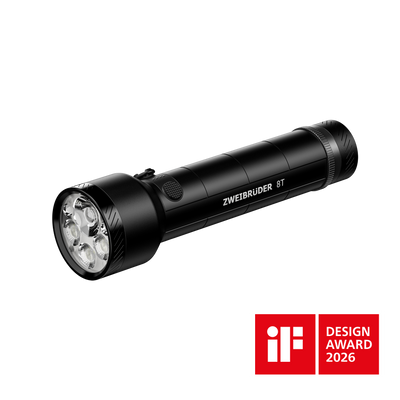
Zweibrüder builds precision LED lighting with German engineering principles applied to professional use. The range covers handheld, pen and head torch formats.
Handheld torches for duty carry
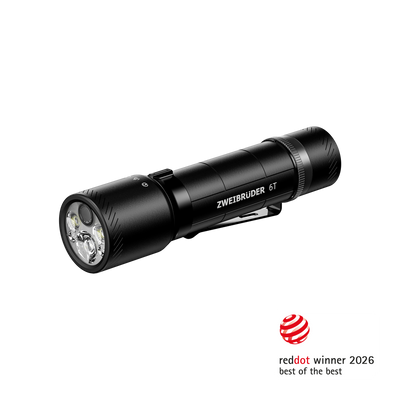
The ZB6T is an aluminium-bodied 3,000-lumen handheld with a 300-metre beam and IP67 sealing, designed for repeated duty use with regulated output, glove-friendly switching and a built-in red light. It was named winner of the Red Dot Best of the Best product award and is supplied with a belt holster.
Pen torches for medical and inspection tasks
The ZB4P is a 400-lumen pen torch with twist focus and dual power (USB-C rechargeable plus AAA backup). It suits pocket carry, casualty assessment, document checks and vehicle inspection. For a closer look at the format, see our pen torch guide.
Coming soon: the ZB19T
The ZB19T is the next addition to the professional handheld range, debuting at the Emergency Services Show in September with UK stock expected from October/November 2026. Full specifications will be published at launch.
USB-C rechargeability and 7-year warranty
USB-C charging removes proprietary cables and simplifies fleet management. A 7-year warranty supports procurement cases where whole-life cost is scrutinised.
Four lens technologies, one torch head
Each lens technology bundles one or more of the beam types above into a single head — from one fixed cone (MF) up to four switchable light functions (QF).


QF — Quattro Functional optic
Quattro Functional optic — four switchable light functions in one head. Maximum flexibility in any situation.
TF — Triplex Functional optic
Triplex Functional optic — a spot beam for range, a flood beam for broad coverage, plus an integrated red light that preserves night vision.
DF — Dual Functional optic
Dual Functional optic — switches between a spot beam for maximum range and a broad, glare-free flood for near-range work.
MF — Mono Functional optic
Mono Functional optic — a single fixed, balanced light cone for consistent illumination.
- Single fixed beam
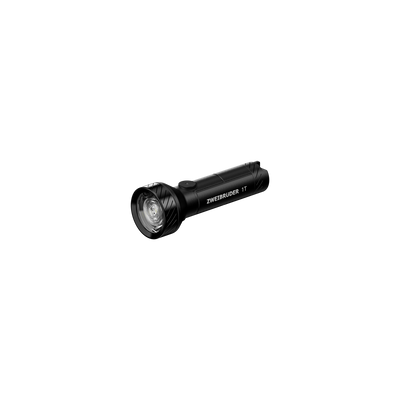
Models: ZB1T
Recommended Zweibrüder models for police use
| Model | Format | Suits |
|---|---|---|
| ZB6T | Handheld | Patrol, search, general duties |
| ZB4P | Pen torch | Medical, inspection, custody |
| ZB19T | Handheld | Coming soon — debuts September 2026 |
ZB6T for handheld professional use
The ZB6T covers routine patrol and search with 3,000 lumens, a 300-metre beam and IP67 sealing. For a full duty-carry comparison, see our tactical torch guide.
ZB4P for medical and inspection tasks
Compact, pocket-carried and suited to pupil checks, paperwork and confined inspection.
Choosing the right model by duty type
Match the model to the environment, not the headline lumen figure.
How to choose the right police torch for your role
General duties and patrol
300 to 600 lumens, 150 metres beam, 6 hours runtime, belt-carried.
Search teams and rural coverage
800 lumens or more, 300 metres beam, head torch plus handheld.
Traffic and roadside incident response
Strobe, rear red visibility, wide flood for vehicle interiors.
Custody, inspection, and medical support
Pen torch, 100 to 300 lumens, even beam, easy to sanitise.
Tactical and specialist response teams
High output, instant-on, momentary switching, IP67.
Police torch maintenance and care
Cleaning after field use
Wipe with a damp cloth, dry the lens and clear grit from the switch surround.
Battery care and charging routines
Charge at end of shift. Avoid running cells fully flat repeatedly. Store at partial charge if unused for weeks.
Inspection for damage and seal integrity
Check O-rings and threads monthly. A cracked seal removes the IP rating entirely.
Storage on belt, vest, or kit bag
Store lens-down in a holster to protect the optic. Keep a spare in the kit bag.
FAQ: What torch do police use?
Do police torches need strobe mode?
Not essential, but useful. Strobe aids roadside visibility and can briefly disorientate. It should never replace a solid working beam.
Are rechargeable torches better for police use?
For most roles, yes. Rechargeable models cut running costs and simplify fleet management. Long remote deployments may still favour disposable cells.
Is a head torch useful for police work?
Yes, particularly for searches, scene examination and any task needing both hands. Most officers carry a head torch alongside a handheld rather than instead of one.
What is the best police torch UK officers can carry?
There is no universal answer, so match the torch to the duties you actually do. The strongest candidates offer 300 lumens or more, IP66 or better, aluminium construction, USB-C charging and a long warranty.
What features should a police duty torch have?
Regulated output, stated beam distance, IP66 or higher, impact resistance, one-handed glove-friendly switching and a dependable charging system.