Key takeaways
- Most paramedics carry two lights: a pen torch for close patient assessment and a compact handheld or head torch for scene work.
- Beam quality matters more than raw brightness in clinical use, because a clean, even beam helps you read skin tone, wounds, and pupils.
- Hands-free head torches are the biggest practical upgrade for procedures, kit checks, and working in confined spaces.
- A duty torch must survive rain, drops, and rough handling, then still charge fully before the next shift.
- USB-C rechargeable torches are now the sensible default for UK emergency staff, because charging works from a vehicle, station, or laptop.
Three Formats, Three Jobs
Paramedics and medical staff use three torch formats: pen torches, handheld torches, and head torches. Each one solves a different problem. UK clinical suppliers stock pen torches with pupil gauges as standard frontline items, which tells you how routine that tool is in ambulance and ward settings. Alongside those, crews carry compact handheld torches for scene work and increasingly use head torches for hands-free tasks. Zweibrüder builds all three formats in its professional range, so a crew can standardise on one system rather than mixing unrelated kit.
Why Torch Choice Matters in Emergency and Medical Work
Light affects clinical judgement. A weak or uneven beam hides bruising, changes how skin tone reads, and makes small wounds harder to see. A torch that fails mid-shift is worse still. Choice matters because the torch is a diagnostic aid, not an accessory.
The Main Torch Types Used by Paramedics
Pen torches handle pupil checks and mouth or wound inspection. Handheld torches light scenes, vehicle interiors, and dark stairwells. Head torches free both hands for cannulation, packaging a patient, or carrying equipment. The same handheld doubles as an inspection light for vehicle and bag checks at the start of a shift.
Head Torches vs Handheld Torches vs Pen Torches
A pen torch gives a narrow, controlled beam at close range. A handheld torch gives higher output and reach, with one-handed control. A head torch points wherever you look, which suits procedures and movement. Most working paramedics end up carrying two of the three. Our guide to head torches for working at night covers the hands-free case in more detail.
Key Requirements: Brightness, Hands-Free Use, Hygiene, and Reliability
The core requirements are consistent output, a wipeable body, secure one-handed switching, and power that lasts the shift. Anodised aluminium bodies clean easily with standard clinical wipes. Simple mode sequences matter because fumbling through five settings wastes seconds.
How Mobile Lighting Supports Night Calls, Triage, and Patient Assessment
On a night call, the lighting sequence usually runs the same way. A handheld torch finds the address and lights the approach. A head torch takes over during assessment and treatment. A pen torch handles the close clinical checks. Mobile lighting keeps that sequence smooth without waiting for scene lighting to arrive.
Best Torch Types for Paramedics and Medical Staff
Head Torches for Hands-Free Clinical Work
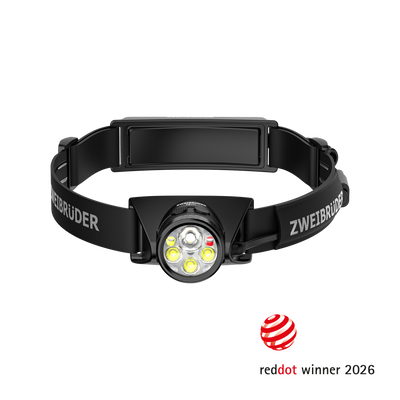
For hands-free procedures, a head torch is the strongest option. It keeps light on the working area while both hands stay on the patient. Look for a light head that tilts, so the beam sits where you look rather than above it.
Handheld Torches for Rapid Scene Assessment
A compact handheld torch belt-carries well and reaches further. Use it to scan a road traffic collision, check a garden path, or search a dark room before entry.
Pen Torches for Pupil Checks and Close Examination
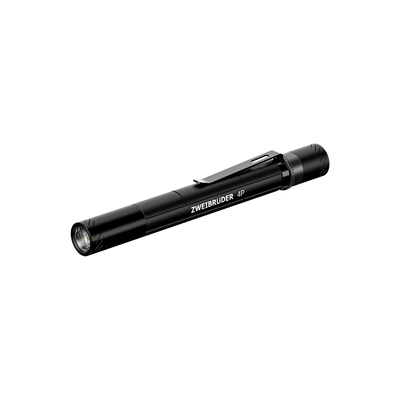
A pen torch clips to a pocket and stays available. Use a low setting at close range: full output in someone's eyes causes glare and discomfort. Our guide to pen torches explains the format and what to look for.
Inspection Use: Equipment, Vehicles, and Cabin Checks
Vehicle daily checks, oxygen cylinder gauges, and dark storage lockers all need a flood beam rather than a tight spot. A handheld with a focusable beam covers this without a separate inspection light.
Higher-Output Torches for On-Scene Awareness
A higher-output duty torch gives longer throw for roadside work, rural callouts, and any scene where you need to see well beyond arm's length. Our tactical torch guide covers this category across police, security, and emergency roles.
How Bright Should a Paramedic Torch Be?
What a Lumen Actually Measures
A lumen measures total light output from a torch. More lumens means more light leaving the head, though it does not tell you how far that light travels or how tightly it is focused. Our plain-English lumens guide sets out what the numbers mean in practice.
How Bright Is 1000 Lumens in Real-World Use?
1000 lumens lights a whole room, a garden, or a section of carriageway clearly. It is more light than you want indoors at close range, and roughly right for outdoor scene work.
When 400 to 500 Lumens Is Enough
400 to 500 lumens covers most everyday paramedic tasks. That level lights a hallway, a patient compartment, or a treatment area without overwhelming glare.
When Higher Output Is More Appropriate
Higher output suits searching, rural incidents, and open ground. For head torches the range tops out at 2500 lumens and a 260-metre beam. If you need to reach further than that, the throw comes from a handheld: 300 metres on the ZB6T and 340 metres on the ZB8T.
Beam Pattern, Spill, and Spot vs Flood
Spot beams throw far and narrow. Flood beams light a wide area close by. Spill is the soft light around the central beam. Clinical work needs flood; searching needs spot. Most models use a manual or digital focus ring to move between the two. Three models — the ZB5H, ZB9H, and ZB6T — use AFT auto-focus, which adjusts the beam without you switching at all.
A Note on Beam Colour
Every model in the range runs at 5700K, a neutral daylight white. That is deliberate: a neutral beam shows blood, bruising, and tissue closer to how they look in daylight than a warm yellow beam does, and it is flicker-free, which matters when you are looking at a pupil response.
See how each beam type behaves
Every beam is a trade-off between reach and spread. Select a beam type, then adjust the power level to see how the pattern and intensity change on a wall a few metres away.


Spot beam
An intense, focused beam with a soft halo around it. Reaches the furthest — this is the beam for searching and identifying at distance.
- Throw (reach) Long
- Spread (width) Narrow
Flood beam
A broad, even spread of light without harsh shadows. Ideal for lighting a whole room, doorway or scene at close range.
- Throw (reach) Short
- Spread (width) Wide
Reading beam
A uniform, shadow-free pool of light. Comfortable and glare-free for close-up tasks like maps, documents and equipment checks.
- Throw (reach) Short
- Spread (width) Medium
Spot + Flood beam
The combined beam: a focused hotspot inside a broad ring of flood light. Distance and peripheral awareness at the same time.
- Throw (reach) Long
- Spread (width) Medium
Power levels: Low 15 lm · Mid 600 lm · High 3,000 lm · Boost 4,000 lm.
Features Emergency and Clinical Staff Should Look For
USB-C Rechargeable Torches for Daily Operational Use
A USB-C rechargeable torch charges from a station, an ambulance USB socket, or a laptop. Every torch and head torch in the range charges over USB-C, which removes the cost and hassle of disposable cells. We compare the two power types in our guide to rechargeable versus battery torches.
Battery Life and Dual-Power Options for Long Shifts
Check runtime at the output you actually use, not at the lowest setting. Two models add a dual-power option for when charging is not possible: the ZB5H takes 3xAAA cells and the ZB4P takes 2xAAA.
Red-Light Modes for Night-Vision Preservation
Red light preserves dark adaptation and disturbs patients less at night. All five head torches have it, as do the ZB6T and ZB8T handhelds. The pocket models — the ZB1T and the ZB4P pen torch — do not. The ZB9H also carries a rear red safety light, which makes you visible from behind on roadside and hillside work.
Auto-Focus and Beam Control
AFT auto-focus adapts the beam to the task without manual switching, and it is fitted to the ZB5H, ZB9H, and ZB6T. That saves seconds and stops you fumbling between spot and flood mid-incident. The remaining models use a digital or twist focus you set yourself.
Weight, Carry, and Wearability
Weight decides whether a torch gets carried. The ZB4P pen torch is 60g. The two lightest head torches, the ZB3H and ZB5H, share the same 124g body, which is the pairing to look at if you wear one for a full shift. The higher-output head torches are heavier — 233g for the ZB7H, 252g for the ZB9H, and 371g for the ZB11H — so match the weight to how long it stays on your head.
Water Resistance, Drop Resistance, and Build Quality
The range is IP67 sealed apart from the ZB11H and ZB8T, which are IP66. All models carry an IK07 impact rating and a 2-metre fall rating, with 1.5 metres on the ZB5H. Those ratings also give procurement teams the evidence they need.
Best Zweibrüder Torches for Paramedics and Medical Staff
ZB4P Pen Torch for Medical Examination
The ZB4P is a 60g penlight built for pupil checks, oral inspection, and wound assessment. It gives 400 lumens with a twist focus and a 90-metre beam, runs 1.5 to 6 hours, is IP67 sealed, and takes 2xAAA cells as a backup to USB-C. Pocket-clip carry keeps it to hand throughout a shift. RRP £34.99.
ZB6T Handheld Torch for Duty Carry
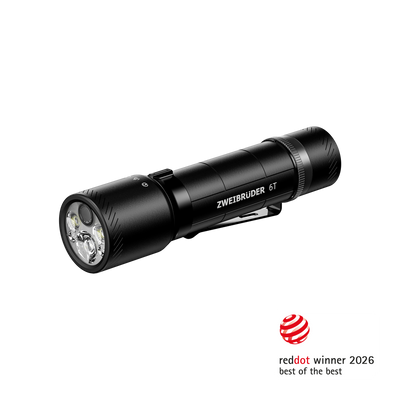
The ZB6T is the duty handheld: 3000 lumens, a 300-metre beam, IP67, 213g, with AFT auto-focus, a red light, and a supplied holster. It is the world's first auto-focus handheld torch, and it won the Red Dot Best of the Best award in 2026. Runtime is 3.5 hours at 2000 lumens and up to 50 hours on low. RRP £89.99.
ZB8T High-Power Handheld for Scene Lighting
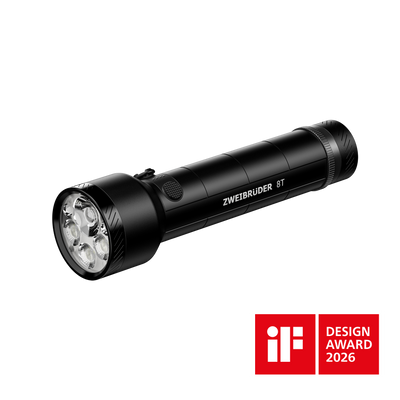
The ZB8T covers scene lighting, searching, and long-range work: 4000 lumens, a 340-metre beam, IP66, 236g, with digital focus, a red light, a joystick switch, and a charging station in the box. It holds an iF Gold Design Award. This is the model for rural callouts and open ground. RRP £139.99.
Head Torches for Hands-Free Work
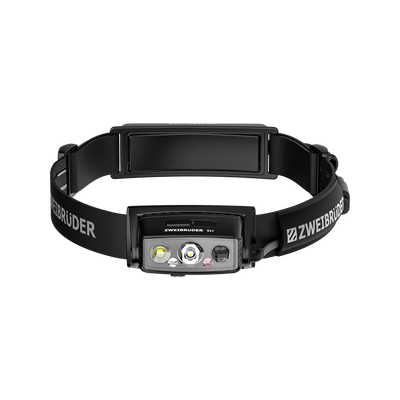
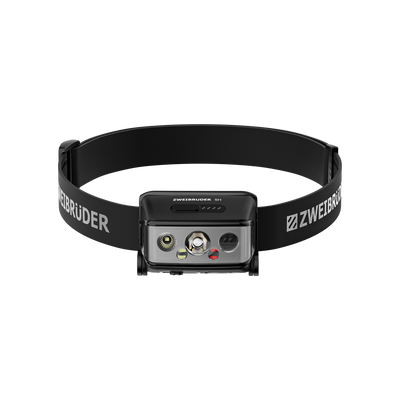
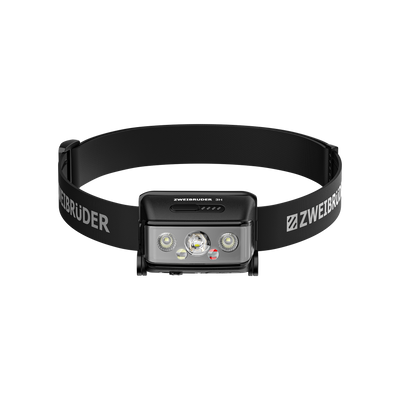
- ZB3H — 600 lumens, 150m, 124g, IP67, 3 to 35 hours. The entry head torch, and a sensible ward or vehicle-interior light. RRP £49.99.
- ZB5H — 1000 lumens, 200m, 124g, IP67, 2.5 to 35 hours. Adds AFT auto-focus and 3xAAA dual power in the same weight as the ZB3H. RRP £79.99.
- ZB7H — 1200 lumens, 240m, 233g, IP67, 4 to 50 hours. Mixed indoor and outdoor work. RRP £89.99.
- ZB9H — 2000 lumens, 260m, 252g, IP67, 3 to 50 hours. AFT auto-focus and a rear red safety light; named Best Headlamp by BILD. RRP £109.99.
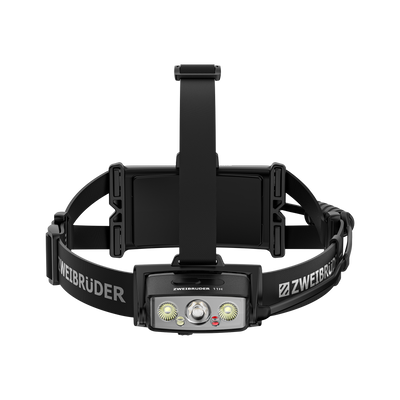
- ZB11H — 2500 lumens, 260m, 371g, IP66, 5 to 80 hours, with a top strap. The 80-hour runtime suits multi-day and long-shift deployments. RRP £149.99.
All five take a helmet mount and have a detachable rubberised headband. Our head torch round-up compares them side by side.
Which Model Suits Which Role Best
Clinical staff working indoors do well with the ZB4P plus the ZB3H. Frontline paramedics benefit from the ZB6T and the ZB5H, which adds auto-focus and dual power without adding weight. Crews working open ground and rural callouts should look at the ZB8T for throw and the ZB9H or ZB11H for hands-free output.
Four lens technologies, one torch head
Each lens technology bundles one or more of the beam types above into a single head — from one fixed cone (MF) up to four switchable light functions (QF).


QF — Quattro Functional optic
Quattro Functional optic — four switchable light functions in one head. Maximum flexibility in any situation.
TF — Triplex Functional optic
Triplex Functional optic — a spot beam for range, a flood beam for broad coverage, plus an integrated red light that preserves night vision.
DF — Dual Functional optic
Dual Functional optic — switches between a spot beam for maximum range and a broad, glare-free flood for near-range work.
MF — Mono Functional optic
Mono Functional optic — a single fixed, balanced light cone for consistent illumination.
- Single fixed beam
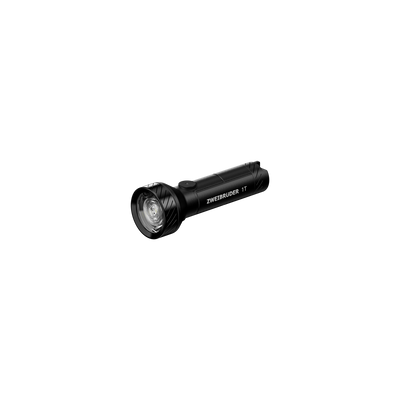
Models: ZB1T
Torch Use Cases in Paramedic and Clinical Practice
Pupil Checks and Neurological Observation
A pen torch gives controlled, close-range light for pupil response. Consistent output matters, because a fading beam changes what you see.
Airway, Wound, and Skin Assessment
A clean, even beam helps you judge cyanosis, pallor, and wound contamination. A washed-out or patchy beam hides detail you need.
Night-Time Incident Response and Triage
Triage in the dark needs a wide beam and fast one-handed control. Head torches keep hands free for tagging and moving patients.
Vehicle, Bag, and Equipment Checks
Daily vehicle and bag checks go faster with a flood beam. Check expiry dates, seals, and cylinder pressures without holding a light in your teeth.
Low-Light Navigation During Outdoor or Remote Callouts
Rural and coastal callouts need reach. A 300-metre beam from a handheld turns a field into navigable ground, and a head torch keeps your hands free for the walk in.
Rechargeable Torch Buying Guide for UK Professionals
What to Prioritise
Prioritise one-handed switching, instant high output, IP rating, impact rating, and warranty length. Every model is covered by a 7-year warranty, which is strong procurement evidence for a self-funded or personal-issue purchase.
Charging Around a Shift Pattern
Aim for a full recharge within a standard rest period. Charge times run from 120 minutes on the ZB4P to 240 minutes on the ZB11H, with most models at 180 to 210 minutes.
Sealing and Charging Ports
UK weather makes water resistance non-negotiable. IP66 is the minimum here and most of the range is IP67. Check the charging port cover is seated before you go out in the rain.
Why USB-C Designs Are Now the Standard
USB-C charges faster, fits the cables already in the vehicle, and removes proprietary chargers from the kit list.
Comparing Torch Specs: What to Check Before You Buy
Lumens, Candela, and Beam Distance
Lumens measure output. Candela measures beam intensity. Beam distance tells you the usable reach. For searching, check beam distance first.
Runtime and Recharge Time
Compare runtime at the medium setting. Check recharge time against your shift pattern.
Weight and Wearability
Weigh head torches with the battery fitted, and be honest about how long it stays on. A 124g unit disappears over twelve hours; a 371g one does not, which is the trade you make for 2500 lumens and 80 hours of runtime.
Beam Modes and Light Colour Options
Fewer modes means faster operation. A red mode plus a neutral 5700K white covers most clinical and outdoor needs.
Warranty and Service Life
Warranty length signals expected service life. CE certification and a 7-year warranty help justify a self-funded purchase.
Recommended Product Comparison Table
Head Torch Comparison
| Model | Output | Beam | Weight | Runtime | Focus | RRP |
|---|---|---|---|---|---|---|
| ZB3H | 600 lm | 150m | 124g | 3–35 h | Digital | £49.99 |
| ZB5H | 1000 lm | 200m | 124g | 2.5–35 h | AFT auto-focus | £79.99 |
| ZB7H | 1200 lm | 240m | 233g | 4–50 h | Digital | £89.99 |
| ZB9H | 2000 lm | 260m | 252g | 3–50 h | AFT auto-focus | £109.99 |
| ZB11H | 2500 lm | 260m | 371g | 5–80 h | Digital | £149.99 |
Handheld and Pen Torch Comparison
| Model | Output | Beam | Weight | Runtime | Carry | RRP |
|---|---|---|---|---|---|---|
| ZB4P | 400 lm | 90m | 60g | 1.5–6 h | Pocket clip | £34.99 |
| ZB6T | 3000 lm | 300m | 213g | 3.5–50 h | Holster | £89.99 |
| ZB8T | 4000 lm | 340m | 236g | 3–50 h | Hand carry | £139.99 |
Matching Output to the Task
| Task | Output you need | Reach | Suggested model |
|---|---|---|---|
| Pupil checks | Lowest setting | Under 1m | ZB4P |
| Indoor assessment | 400–600 lm | 10–30m | ZB3H or ZB4P |
| Scene lighting | 1000–2000 lm | 100–200m | ZB5H or ZB9H |
| Search and open ground | 3000 lm and up | 300m+ | ZB6T or ZB8T |
How to Choose the Right Torch for Your Role
Paramedics and EMTs
Carry a pen torch plus one handheld or head torch. Prioritise durability and instant high output.
Nurses and Clinical Staff
A pen torch usually covers the role. Add a lightweight head torch if you work in dim wards overnight.
Community Responders and First Aiders
A mid-output head torch and a pen torch cover most calls. Weight and runtime matter more than maximum brightness.
Vehicle-Based and Foot-Based Response
Vehicle-based crews can charge in the cab and carry higher-output kit. Responders working on foot should favour lighter models with longer runtime.
What It Costs
A pen torch starts at £34.99 and the entry head torch at £49.99. The professional models run from £79.99 for the ZB5H to £149.99 for the ZB11H. Torches that fail under drops and rain get replaced repeatedly, which costs more over a career than buying a sealed, impact-rated model once.
Torch Care, Cleaning, and Operational Readiness
Cleaning and Disinfection Considerations
Wipe the body and lens with standard clinical wipes after patient contact. Avoid soaking, and dry the charging port before use.
Charging and Battery Maintenance
Charge at the end of each shift. Avoid storing a battery fully flat for long periods.
Storage Between Shifts
Store in a dry locker or the supplied pouch or holster. Keep the lens facing away from hard contact.
Inspection Checks Before Deployment
Check output, mode switching, lens clarity, and charge level as part of your daily vehicle check.
Preventing Loss, Damage, and Performance Drop
Use the clip, lanyard, or holster every time. Most losses happen when a torch is set down mid-task.
FAQs About Paramedic and Medical Torches
What Torch Do Paramedics Use Most Often?
Pen torches are the most commonly carried item, because they cover pupil checks and close examination. Handheld and head torches follow closely for scene and hands-free work.
Is a Pen Torch Still Used in Modern Practice?
Yes. UK clinical suppliers stock pen torches with pupil gauges as standard frontline items, and they remain the reference tool for neurological observation.
How Bright Is Bright Enough for Emergency Work?
400 to 500 lumens covers most patient-facing work. Move to 1000 lumens or more when you need to search open ground or light a large scene.
Are Rechargeable Torches Better for Clinical Teams?
For most teams, yes. USB-C charging removes battery costs and keeps output consistent, provided the team charges kit at the end of each shift.
What Is the Best Torch for Medical and Outdoor Use Combined?
The ZB5H is the closest single answer: 1000 lumens and a 200-metre beam at 124g, with auto-focus, a red mode, and AAA backup power. Pair it with the ZB4P pen torch for clinical detail.
Choosing lighting for emergency and clinical work comes down to matching the format to the task, then checking output, runtime, IP rating, and warranty before you buy. To compare pen torches, handheld torches, and the full head torch range with complete specifications, visit zweibruder.co.uk.